

Wise Words
“Hope sees the invisible, feels the intangible, and achieves the impossible.” — Helen Keller
National Mental Health Crisis and Suicide Hotline:
988 Lifeline – If you need emotional support, reach out to the national mental health hotline: 988.
Where did the term silver linings come from? It was from a poem by Milton called ‘Comus’ in which he envisioned the light of the moon from behind a cloud:
Was I deceived? or did a sable cloud
Turn forth her silver lining on the night?
I did not err, there does a sable cloud,
Turn out her silver lining on the night
And casts a gleam over this tufted grove.
Silver linings from the moon or the sun remind us that we can have hope even when our skies are cloudy, that is, even when life looks bleak and dark.
Silver linings and hope are closely related. When you look for the silver lining you are exhibiting hope for a positive outcome. But what is hope?
Hope is a word that is hard to define. Hope is not wishful thinking. It is not shrugging your shoulders and leaving things to fate. Hope is a strong mindset that implies belief and action toward a positive outcome.
Hope keeps you from sliding into a cloudy outlook, and sometimes depression.
For many people hope also means that God is in ultimate control, He can help, and that He knows what is best.
Table of Contents
OUR CHAOTIC REALITY
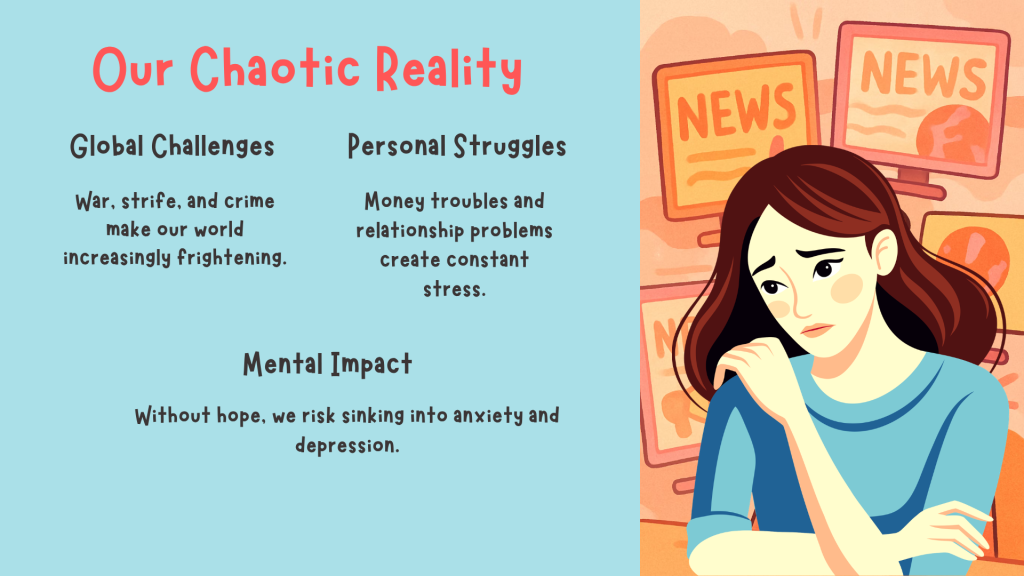
War. Strife. Crime. The world can be a terrifying place. Even at home, things can be equally unsettled. Money troubles. Relationship troubles. Community problems. Everywhere you look, there seems to be a brand-new crisis emerging.
What do you do when you feel as though everything around you and in your personal life is blowing up?
Hanging onto hope in a tumultuous world can be a real challenge, especially when you’re the one feeling out of control. This is when silver linings seem pretty sparse. And they can be hard to cling to, once you’ve found them.
But the key is holding on to hope and positivity. More than anything else, it’s your own mood, which will draw you down if you’re not careful. The last thing you need is to sink into hopelessness, or worse, anxiety and depression. This is why hope is so important.
10 WAYS TO FIND SILVER LININGS IN YOUR LIFE
In this article, you’re going to discover your silver linings. You will discover what hope is. More importantly, you’re going to experience the power of hope.
And don’t worry if you think you’ve already lost hope entirely, and there’s no way out. There is, once you start digging into the guidance in this article.
You’ll learn how to rekindle hope even in the worst of circumstances. You will find 10 important ways to find the silver linings in your life.
So, don’t give up! You really do have reason to hope with plenty of silver linings still in your future.
1. UNDERSTAND – WHAT DO WE MEAN BY SILVER LININGS?
Wise Words
Hope involves patient waiting for what is unseen.
Romans 8:24–25
Hope. It seems it’s always associated with sunshine. Why? Maybe because there’s nothing quite so bright and cheerful as the sun.
But on those rainy days where you never see the sun at all, you might experience lethargy. It’s harder to think or even to stay awake.
Rainy days can become a struggle, especially if you’re already tired or experiencing stress.
This is why we get excited about the fabled ‘silver lining’ we see on clouds.
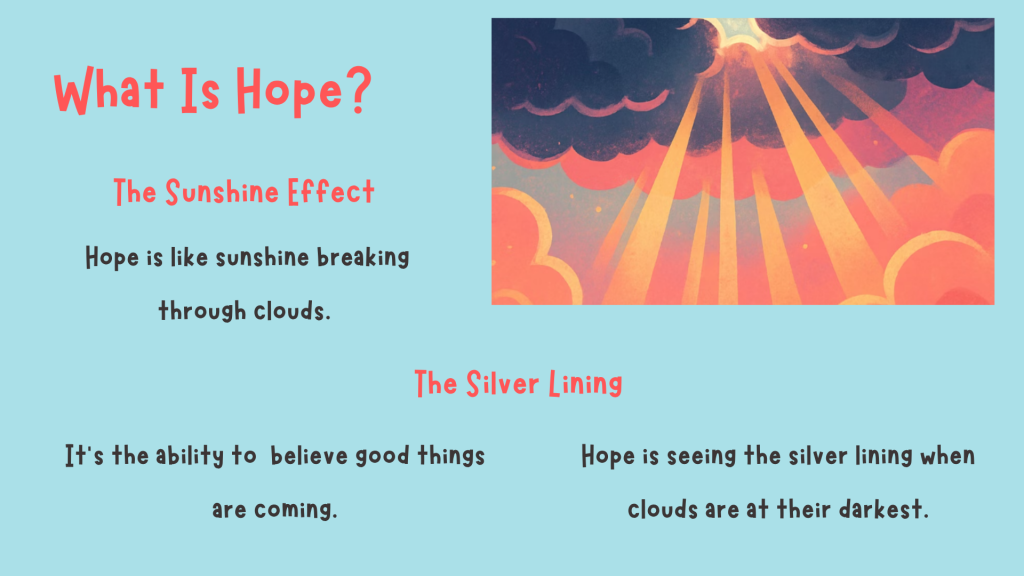
When the sun is about to break through the clouds, we catch a glimpse of it in the places where the clouds are thinnest, turning those spots to ‘silver’ right before our eyes.
When we see the silver in the cloud, we can’t help but experience a surge of joy, for we know we’ll be seeing the sun soon. The sun is about to appear and create a sunny day.
Hope is a similar feeling of anticipation. Hope is like seeing the silver lining which tells us whatever trouble we’re in, it’s possible that our worries will be over and done with — that things are about to get a whole lot better.
Put more simply; hope is the ability to see the opportunities in the crisis and the good about to come our way. Hope is about optimism and the idea that the bad things aren’t going to last forever.
It’s also one of the most powerful and vital emotions in the world.
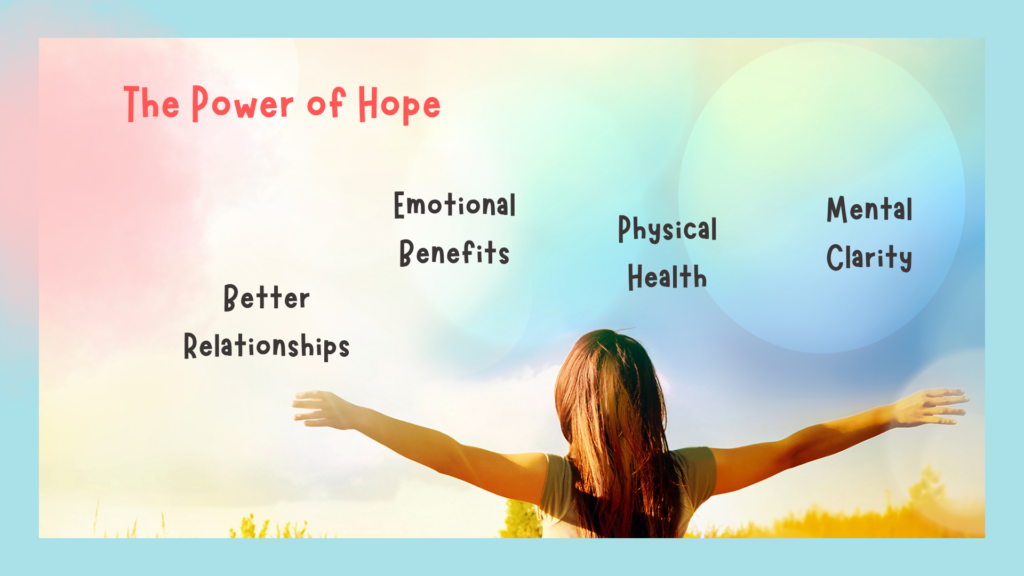
There’s a lot more to hope than the ability to look on the bright side of things. In fact, hope has quite a bit going for it, with benefits ranging from improved health and mental well-being to the manifestation of outward success at home and work. Don’t worry. I will provide ways to develop your own hopeful mind later in this piece.
Think about what having hope does for you:
Start Your Day with a Smile
Having a hopeful mind means you wake up with optimism. After all, why wouldn’t you feel positive as you set about your morning routine? You already know today is going to be a great day!
Experience Joy
Hope doesn’t have room for anxiety, fear, or worry. Instead, it calls to optimism, anticipation, and yes, happiness. Hope sees the good coming and gets you excited about what’s coming next. This alone is pretty powerful stuff.
Enjoy Clarity of Thought
Research has shown that optimistic people actually think more clearly. In a study from the Indiana School of Law in Indianapolis, it was discovered that those who saw themselves as hopeful individuals did much better academically over those who did not.
Be More Motivated
People who have hope have an easier time buckling down and getting to work. Because of this, they’re also apt to get more done when they do sit down. Why? In part because they’re tapping into their enthusiasm and positive feelings toward the future. With a sense of a positive outcome, no matter what, it’s no wonder you can’t wait to get started.
Attack Problems with Creativity
This is another outgrowth of a clear mind, coupled with motivation. Hopeful people tend to be more goal-oriented, meaning they’re going to look harder for solutions. The optimistic inclination toward the idea that they’re likely to succeed makes them take more chances and think outside the box to get things done. In short, they become more creative in reaching their goals.
Have More Successful Outcomes
All of this together leads naturally toward having a higher degree of success. Don’t believe it? In the study mentioned before, hope might have led to better grades, but it also led to more achievement academically. Hopeful people tend to set more goals, then do what it takes to pursue them. Why wouldn’t they? They’re already expecting to succeed!
Feel More Satisfied
Hope tells you the work you’re doing is for a purpose. With this purpose comes the knowledge that everything you do will push you toward your goals to eventual success. How can you not be satisfied knowing that?
Live Adventurously
Hope means you have a favorable view of outcomes, so you aren’t hesitant when it comes to taking chances. It’s hopelessness, which tells you you’re going to fail. If this were truly the case, you’d never do anything at all. Thankfully, hope is always just around the corner, encouraging you to keep trying even if the outcome sometimes isn’t right.
Engage in Deeper Relationships
Hope allows you to enjoy the people around you and see them as being on your side. With this in mind, you’re more likely to put effort into your relationship, to trust the other person more, and to allow yourself to be more vulnerable with them. This creates intimacy on intense levels.
Feel Better
Did you know hope can impact your health? Hopeful people tend to heal faster and have more robust immune systems. They even report experiencing less pain than those who focus on the more negative aspects of their health. Hope has even been shown to improve your breathing and heart function. You’re also more likely to get through a major health crisis if you’re hopeful than if you’re not.
Sleep Better
When you reach the end of the day, a hopeful mind puts you to bed again with a great deal of peace. Hope tells you tomorrow things are going to work out just fine, meaning it’s ok to let things go and rest. A hopeful mind is less likely to experience insomnia and will sleep better and deeper than an unsettled one. You’ll also be more likely to stay asleep through the night, meaning you wake up bright and refreshed when you’re hopeful.
Put all this together, and you’ll see some pretty bright outcomes to living with hope. That’s powerful stuff! It also makes it that much more noticeable when you’ve lost hope completely.
2. RECOGNIZE SIGNS OF HOPELESSNESS
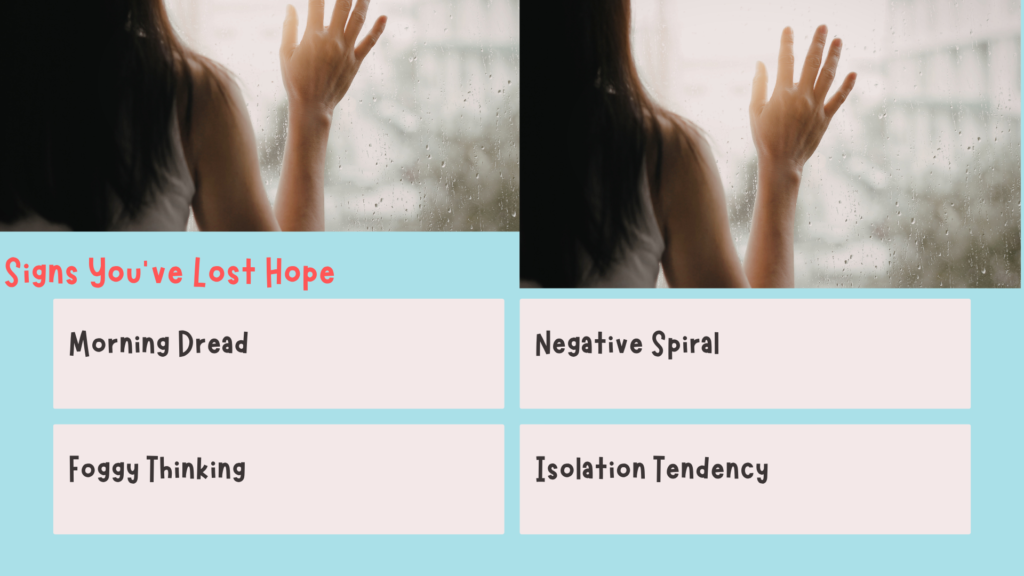
The funny thing about hope is how you’re not always aware you’ve lost it until it’s been gone a while. Mostly this is because very rarely does someone lose hope overnight. Typically, this is more of a gradual process, wrought by repeated disappointments over time.
If you think you might be losing hope, think about this: Hope is about optimism. Without faith, your mood changes. You become more cynical, more bitter. You start expecting things to go wrong.
When this happens, you see a whole slew of things going wrong, much like a carefully laid out row of dominoes tumbling when the first one is pushed. To make this clearer, let’s look at the last chapter’s list from the side of someone who’s lost hope.
You Wake Up Tired
Without hope, you start the day already dragging. You feel like there’s nothing to look forward to, and everything just looks like a lot of hard work, starting with getting up. You’ve probably hit your snooze alarm more times than you can count, and you still feel exhausted when you get up.
When you’re losing hope, nothing feels like it’s going to go right. Chances are, they aren’t. Morning traffic will seem worse (even if it’s the same traffic you experience every day). Even small things like a broken shoelace will annoy you more and make it seem as though just one more thing has gone wrong with the day.
Negativity Crowds In
Now that you’re moving, how’s your mood? If you’re losing hope, chances are you’re feeling somewhat pessimistic. Worse, everything becomes more difficult as though the world is out to annoy you. Patience wears thin, and everything that even looks the littlest bit dismal becomes one more proof there’s no reason for hope in the first place.
If you’ve already lost hope, you are more likely to be on the deeper negative end of the spectrum and into the world of anxiety, fear, and worry. The quickest way to tell if you’re feeling hopeless? Think about the last time you felt truly happy. If you can’t remember, then you’re probably already there.
Thinking Becomes Foggy and Muddled
Negative emotions, especially worry or despair, have a way of buzzing along in the back of your mind, distracting you, and making it harder to think. After all, if you’re already deep into the unconscious search for proof, life is hard, you’re not likely to have a lot of brainpower left over for thinking deep thoughts. If you believe this shouldn’t matter, consider this: how many times have you had a hard time making a decision about something when you were having a terrible day or weren’t feeling well?
You Isolate
When you become mired in negative emotion, it’s hard to give time or energy to your relationships. Worse, you’re so busy expecting disaster, you might start pushing away the people in your life, either trying to protect them from yourself or because you feel you don’t deserve them. Either way, you’re more likely to start spending time alone, telling yourself it’s just better that way. Worse, whatever relationships you have will begin to suffer. People will only put up with being pushed away so often before they reach a point where they stop coming back.
Lethargy Sinks You
Moving through the day can feel like walking through quicksand: the more effort you put into forward motion, the less you’re likely to get done. Why? The brain just doesn’t want to buckle down and work when you lack hope. After all, it doesn’t see any reason to, so why put in the effort? As a result, you’re going to find yourself procrastinating, even on things you typically enjoy doing. New projects will seem dismal, and existing ones are just something else to weigh you down.
Creativity Dies
If you don’t have any hope of success, why would you even imagine doing something in a new way? Your brain will stall out just thinking about it. You’re likely to keep running in circles trying to figure out how to keep doing things the old way.
Failure Beckons
How can you possibly succeed if you think you’re doomed to fail when you start? Even if you think you’re putting in a reasonable effort, you’re more likely to subconsciously sink yourself before you even begin. In part, this is a protective instinct. If you know you’re going to fail, it’s going to be humiliating. Wouldn’t it be better to fail early, before you become too attached to the outcome, or you put too much of yourself into it?
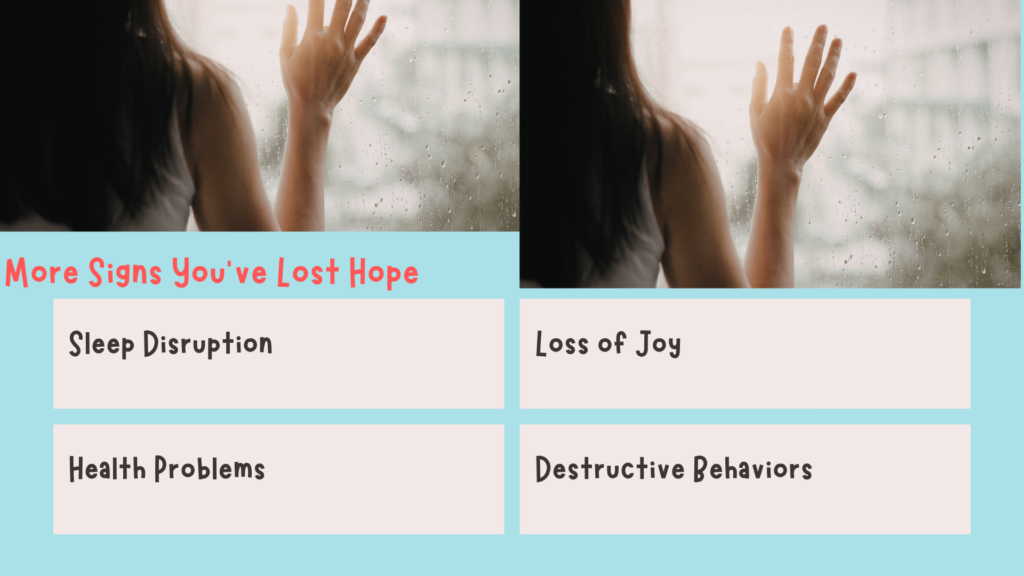
You Feel More Dissatisfied
Without hope, your goals evaporate. Why even make them if you’re not going to succeed? Without goals, you’re going to feel more and more as though the work you’re doing has no purpose at all. Job satisfaction plummets as you feel like you’re just battering yourself against a wall for no reason.
You Don’t Try New Strategies – You Play it Safe
If the outcome of doing something in a new way has no hope of success, wouldn’t you rather do it the old way, since the new idea is doomed to fail? So you’re less likely to try something new, despite all the proof telling you the outcome is expected to succeed.
Your Health Suffers
Worry and stress have been proven time and time again in dozens of studies to harm your health. When you don’t have hope, you’re going to get sick more often. Healing will take forever, and you will experience more pain. These are just hard cold facts. Worse, if you are diagnosed with a serious illness, giving up hope will make it much harder for doctors to cure you.
Insomnia Strikes
Nothing keeps you up all night more than sitting and worrying about whatever crisis you’re going through. If you have no hope for a better outcome, you’re going to lay awake for hours, going over and over your problems, to the point where you can’t sleep at all. Or if you’re lucky and do get to sleep, you’re likely to have disturbing dreams, wake up often, and wake up groggy and lethargic. Or, worse yet, you might find yourself sleeping more as an escape from your present situation. You’ll be disengaged, and it will even harm your health as you’re not exercising and moving around the way you should.
Things Don’t Seem Fun Anymore
Without hope, it’s impossible to find enjoyment in the things you used to do. Hope tells you relaxing pastimes have a purpose, learning will give you future benefits, and taking time for yourself is time well invested. But when you lose hope, there simply is no point. You feel that hobbies are a waste of time. Learning becomes pointless, and time spent on yourself is just thrown away because there’s no way to improve yourself or your situation. Keep in mind, you’re likely not consciously thinking any of these things, but you’re definitely feeling it whenever you find yourself shying away from doing something you used to really love.
You Engage in Destructive Behaviors
Without hope, your brain starts looking for ways to hide. After all, when the world is an impossible place, you need to protect yourself somehow. Checking out for a while even starts to seem reasonable over time. Many people use sex, alcohol, or drugs to escape. While this might sound like a heck of a weekend, we’re not talking about a party Friday night with your buds. This kind of behavior can be pure escapism, where you engage in these behaviors solely to get away from what’s going on in your life.
If you find you’re getting high often, drinking to the point of drunkenness or drinking alone, or engaging in risky sexual behavior, it might be time for a wake-up call. Hopelessness only compounds the more you escape. The bad stuff you were running from will still be there when you wake up the next day, but so will the consequences from your bender.
This is why it’s so essential to rekindle hope the moment you start floundering.
3. REKINDLE HOPE AND FIND THOSE SILVER LININGS

If you’ve gone through the last section on losing hope and feel a little worse for wear, you’re not alone. Everyone feels hopeless sometimes. It’s easy to lose your optimism when the world insists on coming at you with one new crisis after another. As we’ve said, we live in chaotic times, which means life is prone to sudden and unexpected upheaval.
The thing is, we don’t have to lose ourselves when things go wrong. We can still hold on to all those silver linings with a little intentionality, and yes, sometimes some hard work. And even if we feel heavily hopeless, things can still change for the better.
Think about it: hope regained! Yes, there is such a thing. All you need to begin is an open mind and a willingness to try.
That said, let’s dig into those tips:
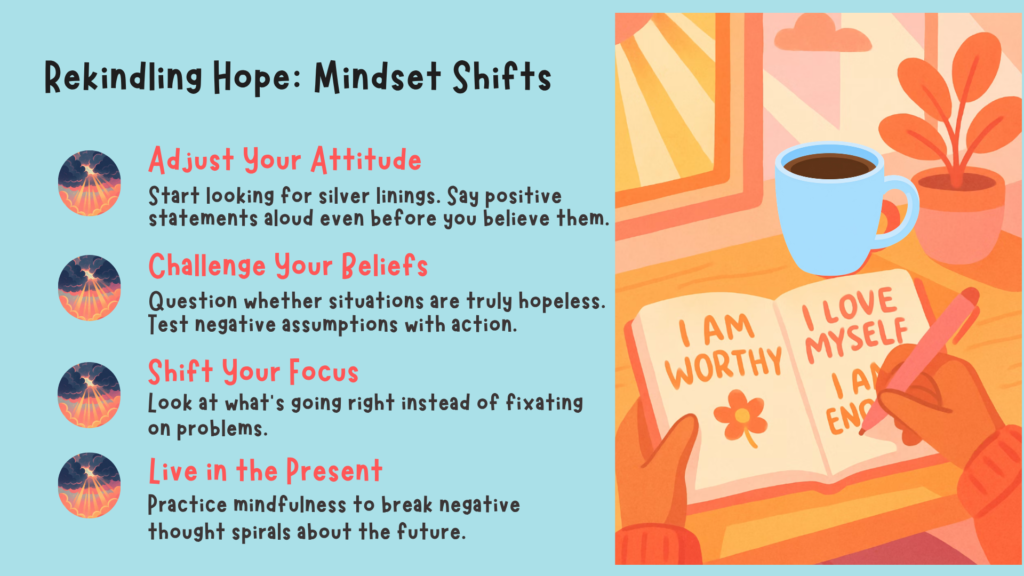
Attitude is Everything
While it’s hard sometimes to embrace optimism when you’re feeling hopeless, it really does help. Keep it simple to start. Simply start looking for the silver lining in a particular situation. Say it out loud, such as, “This isn’t so bad” orr “This could be much worse.” Even if you don’t believe it fully, it will help, and eventually, the attitude will start to rub off.
Believe Things Are Getting Better
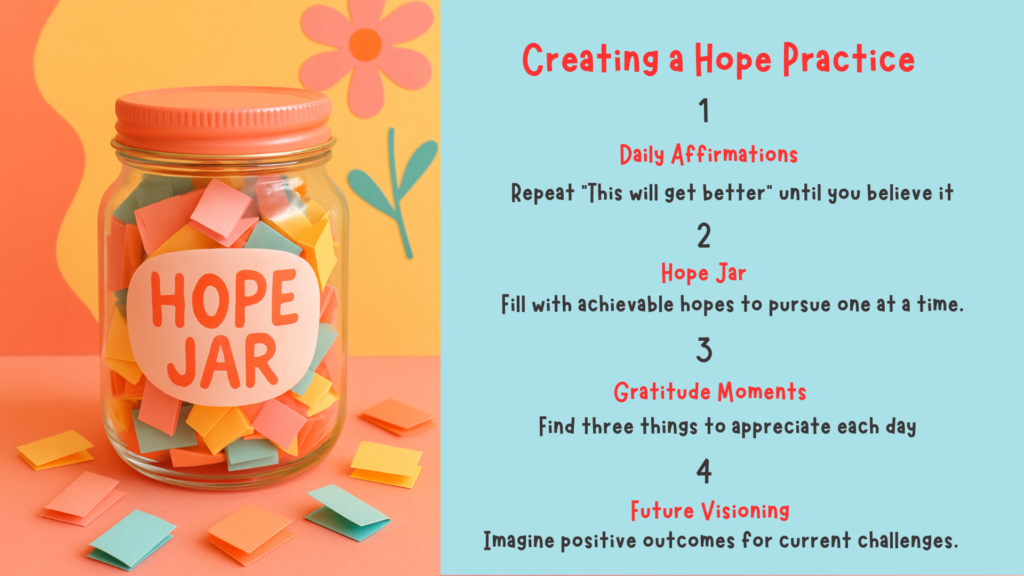
In the end, the only thing you have to do to feel hope is to sincerely believe that this isn’t the end. Things are not only capable of changing but will change to improve the situation. This can be hard, but even just saying the words “This will get better” out loud will create a glimmering of light. This is the silver lining breaking through. Repeat these words daily, and believe them with all your might as you do. Soon you’re going to find this easier to say. Better yet, you’ll find you believe it.
Look Elsewhere
Ok, this one thing in your life isn’t going right. Instead of staring endlessly at it, why not find your silver lining by putting your focus on the things which are going right?
Glas Half Empty or Half Full?
If you’ve gotten into a rather hopeless mindset, you might have fallen into the trap of seeing every glass as half empty. Readjust your expectations by listing out what can go right whenever you set out to do something, instead of worrying about what can go wrong.
Be in the Now
When the world is tumultuous, most of our hopelessness stems from worry about the future. Ask yourself, “What is the worst that can happen, and how probable is that?” Instead of thinking only about what might be, examine where you are in the present. Think about what you are grateful for right now.
Make a List
Just how often did you have a disastrous result anyway? If you’re sure everything in your life has gone wrong, challenge it. Start writing down the events of your life and ask yourself very honestly if things went right or wrong (or a mixture of both) on each item. The silver lining here lies in the discovery your life isn’t as bad as you thought it was.
4. LOOK FOR SILVER LININGS DAILY
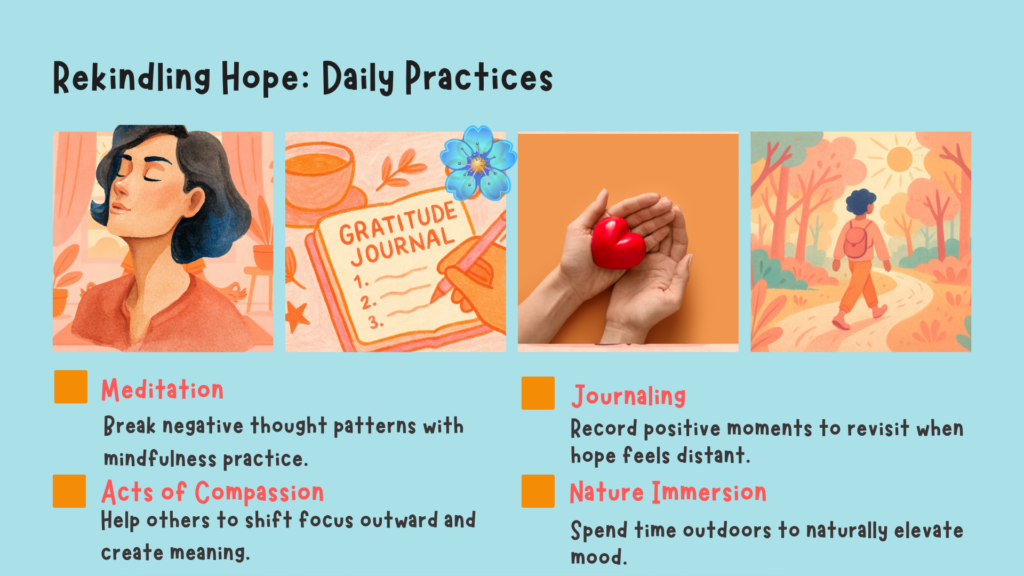
Meditate
When you’re having trouble getting out of your negative thought patterns, a little mindfulness will sometimes do the job for you. By taking a few minutes to meditate, you break the spiral of doubt and take back control of your mind so you can direct it toward more hopeful messages.
Show compassion
Hopelessness is very self-focused. By reaching out to others, you force your focus outwards. The silver lining here benefits not just you but those around you as you step out to do something thoughtful for someone else. This would be an excellent time for a random act of kindness.
Journal
Write down what you are thankful for today. Writing about the good in your day works in two ways. First, you’re forced to recognize where things are going right in your life. Second, you now have a record of those good things you can draw on later, to remind yourself this situation is temporary.
Get Outside
Your mood lifts toward the positive when you step out into nature. Add in the bonus of sunshine, and you have a clear win on mood improvement, as proven in various studies. While exercise is best, even sitting quietly in a green space and fresh air can make a huge difference in how you feel about the future.
Stop Looking Back
Things may look pretty bad for you right now, but dwelling on how you got here isn’t going to help anything. Be done with looking back. If there’s a lesson to be learned from the past, take it, then move on. Hope comes in looking forward.
You’ve Been Here Before
You only want to take a short look at the past, as you’ll see in the next tip, but there is a valuable reason to look back. It’s time to recognize you’ve been challenged before AND come through it. Use this as a silver lining to give you hope: the same is true even now.
Review Your Goals
Speaking of looking forward, do you know where you’re going? The silver lining to the situation might lie in a clearer idea of what direction you want to take. It’s time to look at your ultimate goal all over again
Question Everything
Is the situation hopeless, or do you only think it is? Consider the idea that you might be wrong. In fact, you probably are, since very often circumstances are not as black and white as you might think.
Prove Yourself Wrong
If you’re thinking things are really terrible, why not put it to the test? Challenge the belief by doing something actively to see if this is really the case. Worried your friends don’t like you? Why not invite them out and see what they say? Or better yet, ask them outright.
Watch Your Online Presence
No, you don’t have to turn off your phone. Instead, pay attention to what you’ve been paying attention to. Instead of wallowing in negative media or getting lost in the news, look for positive and upbeat stories instead. Keep a balance in your mind. Yes, there is a purpose for feel-good clickbait, after all.
5. PROCESS EMOTIONS
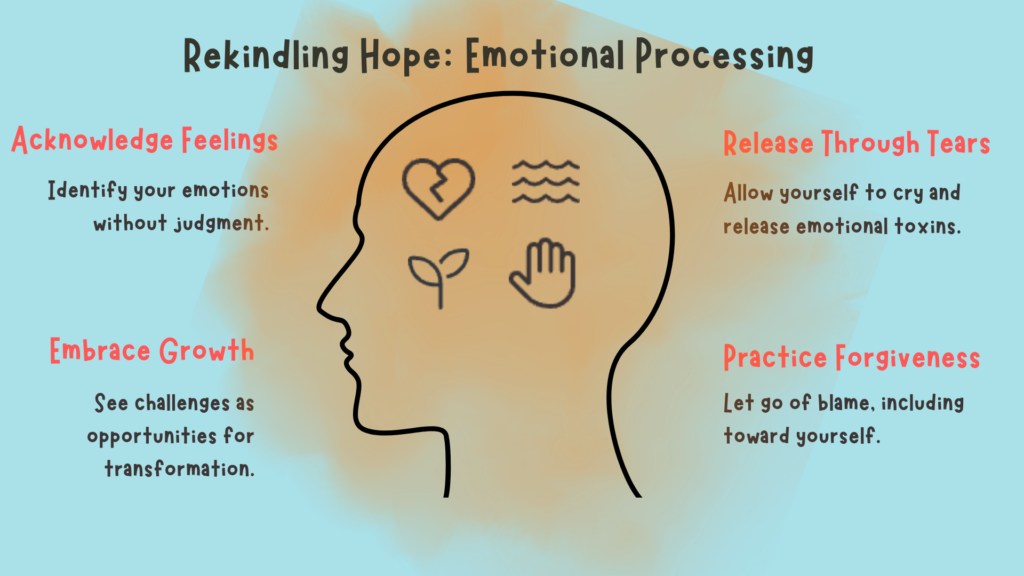
Understand Your Attitude
Feeling hopeless about changing your hopelessness? If you’re doing these steps but feeling like you’re stuck in a rut, maybe it’s time to assess where you gained these self-defeating beliefs and what purpose they serve in your life. This might require the help of someone with an impartial view, such as a friend, mentor, or counselor.
Understanding your beliefs is key, though, to defeat them once and for all. And doesn’t that make going through the troubles you are right now kind of worth it, if you can finally lose the feelings of hopelessness completely?
Examine Your Emotions
What are you feeling right now? What do you need? The silver lining in this latest disaster might be in finding enough time to figure out what you’re feeling, especially regarding your life and goals. How those emotions relate to your needs can be very eye-opening.
What you thought was despair might instead be disappointment over something left undone, which you now can remedy or work through. Hope emerges with this kind of deep understanding of yourself, especially now that you’ve stopped fighting what you’re feeling.
Cry
It might seem counterproductive to let loose, but weeping gives a healthy outlet for suppressed emotions. By allowing yourself a good bawl-your-eyes-out crying jag, you’re going to flush a lot of toxins out of your system, starting with all your feelings of pain and helplessness.
When it’s over, you’re going to feel a whole lot lighter and with more room for hope than you’ve had in a long time. Maybe your silver lining here lies in being given an outlet to cry that you might have needed for a while.
Forgive
Is there someone or something to blame for getting you where you are now? Holding onto these angry and hopeless feelings of being at the mercy of someone or something else is only going to hold you back.
Trust
This only comes after forgiveness. Now you need to have hope enough to trust things will be better in the future. Trust isn’t blind, though, and it’s a conscious choice. Sometimes you have to believe that even if things go wrong again, you’re going to be all right. Hope is what allows this trust to live.
To find hope again, you have to let this go. Forgive, even if you’re not asked to forgive, even if the person to forgive is yourself. Silver linings are plentiful when you’re able to let go of anger and disappointment to grasp the hope of what comes next.
Practice Empathy
Our disasters frequently open our eyes to the problematic things those around us are going through. By taking time out to put yourself in someone else’s shoes for a bit, you take the focus off of your own problems. Empathy is terrific as it empowers both of you.
At the same time, you’ll find yourself becoming more compassionate and more inclined to see hope, even if only for another person. The beautiful thing is that they might, in turn, help you see hope in your own situation. This is a wonderful silver lining where everybody wins.
6. BE CONNECTED
Wise Words
May the God of hope fill you with all joy and peace as you trust in him, so that you may overflow with hope by the power of the Holy Spirit.
–Romans 15:13 –
Go Out
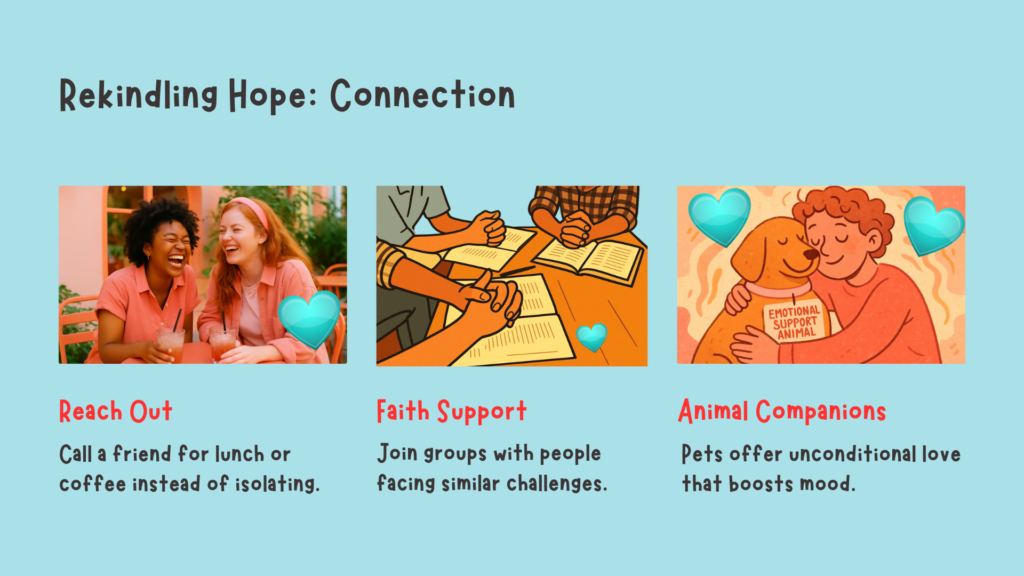
Are you isolating? Hopelessness keeps you in, and alone. By forcing yourself out into the world, you’re going to benefit more than your mood. You’re going to find the silver lining in this disaster in the care and compassion of friends and family, people who love you and want to spend time with you. But don’t wait for them to call you first. This has to be at your initiative. Call someone up to meet for lunch or a walk in the park. Grab coffee. Do something which gets you out of the house.
Call Someone
Not able to leave? If circumstances are keeping you stuck at home, there are still ways to stay in touch. Call a friend, or better yet, Skype, Zoom, Facetime, or use one of a dozen other apps so you can see the other person’s face while you talk. You’ll feel less alone and isolated and more hopeful just in seeing their smile.
Have Faith
Many find a lot of hope in spiritual practice. The silver lining here might be a return to church, time spent in communion with God, or even just quiet reflection and rest of your spirit. Look up some Bible stories where God blessed people during or after a disaster.
Join a Support Group
Feeling like the people you know aren’t close enough to share with or understand what you’re going through? It might be that a faith support group or specific support group would be more helpful. Finding people in a compassionate group can help you to gain new perspectives and support. Having a team of this nature on your side can become quite a silver lining to a terrible situation. They also act as a reminder that you’re not alone in this.
Find an Online Community
One last word in spending time with others. If you’re really having a hard time finding people to spend time with in-person, there are a lot of online communities that can give added support and friendship. A note of caution: spending too much time online can have the adverse effect of isolating yourself further. Remember to still get out once in a while.
Grab a Mentor
Who else has been in your shoes? If you’re having trouble in knowing what to do next and feel hopeless about your next steps, finding a mentor who has been right where you are can be a godsend. These kinds of mentors also tend to become lifelong friends, a silver lining which is rather lovely to stumble on.
Question Others
Are you having trouble finding the silver lining in your own world? Ask someone else what’s they’ve found positive in their day. Hope tends to rub off on others so that you might catch a little optimism from them.
Look for Optimists
When you’re feeling especially hopeless, it might be a good idea to spend a little time with the most positive people in your life. Sure, it can be annoying to have someone around who is always looking on the bright side of life, but believe it or not, their mood will start to rub off on you. The silver lining of your situation might be in your own change over to optimism.
Spend Time with a Pet
Find the company of a furry friend when there aren’t humans around. Your pets love you, unconditionally. Studies have shown that just petting a dog or cat lowers your blood pressure and helps you to feel more positive. If you have no pet, maybe now might be a good time to add one into your life.
There are shelters throughout the country where you can rescue your new best friend, making you the silver lining to their lives too.
But find the right pet for you. Fish in a tank can also be calming, and you can talk to them as easily as chatting with a dog or cat.
7. PRACTICE SILVER-LINING SELF CARE
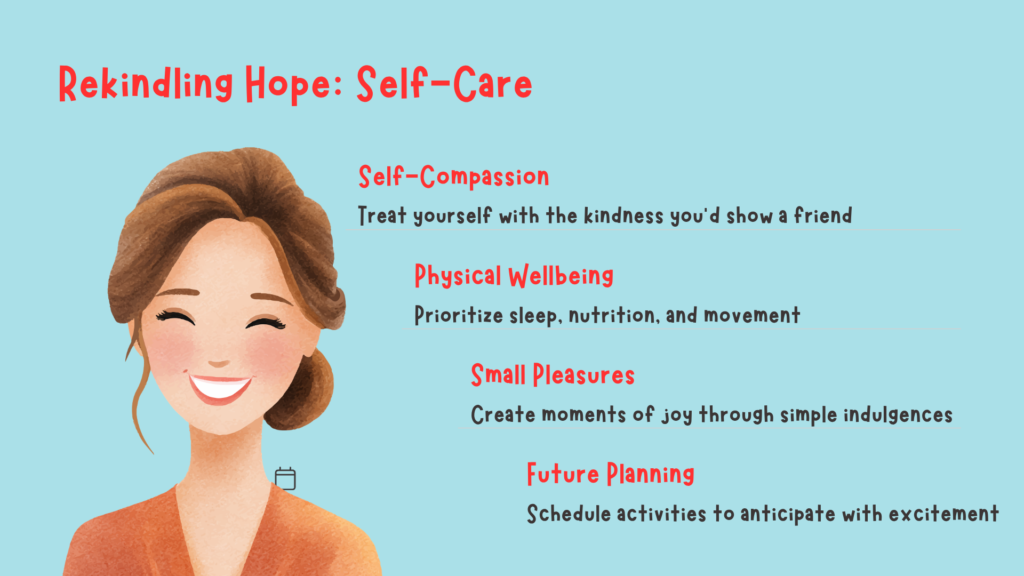
Practice Self-Care
Part of being kind to yourself is to treat yourself as though you’re worthy of this care. When you’re hopeless, you’re less likely to bother with these things. The silver lining in any seemingly hopeless situation is the opportunity to give yourself a reality check.
Where are you right now in your physical health? Are there things you need to address which are making you feel more hopeless? Are you getting enough sleep, exercising, eating the right things? What about tending to your mental state and those needs?
This is an honest assessment that should lead to affirmative action. A healthy you is a more hopeful you.
Self-Compassion
You are more than your troubles. It’s easy to get caught up thinking a disaster defines you, but it doesn’t. You are not your diagnosis, your situation, or your place in the crisis. There’s a lot more to you than that. For a quick, silver lining, take a minute to think about all the roles you play, mainly focusing on what you like best about yourself.
Pamper Yourself
What’s a kindness you can do for yourself? Maybe you want to use this time to focus inwards on some of your own needs. Give yourself permission to pursue a new hobby, read a book, listen to music you love, indulge in a spa day at home.
Whatever you love, you need it more than ever when things look hopeless. And yes, it’s ok to give a little time to yourself even in a disaster.
Future Planning
Plan some future activities that you can look forward to; a concert, picnic, sports event, a road trip.
Give Yourself Time
Trying to throw yourself into action too soon after a setback can be frustrating and feel hopeless. Having patience enough to allow time to process, plan, and move on to the next steps allows time to adapt to changing circumstances and yet give yourself time to breathe.
Breathe Deep
Speaking of breathing, sometimes all you need to feel hopeful is a few minutes to gather your thoughts. Take a few deep breaths to slow things down. Hope grows when you give it time to do so.
Loosen Your Grip
This has been touched on lightly, but it needs to be repeated. You can’t be so hard on yourself. Forgive. Trust. Allow yourself to be human. Seek out the silver lining, which comes from recognizing you’re a fantastic human being.
8. EMPOWER YOUR SILVER-LINING LIFE
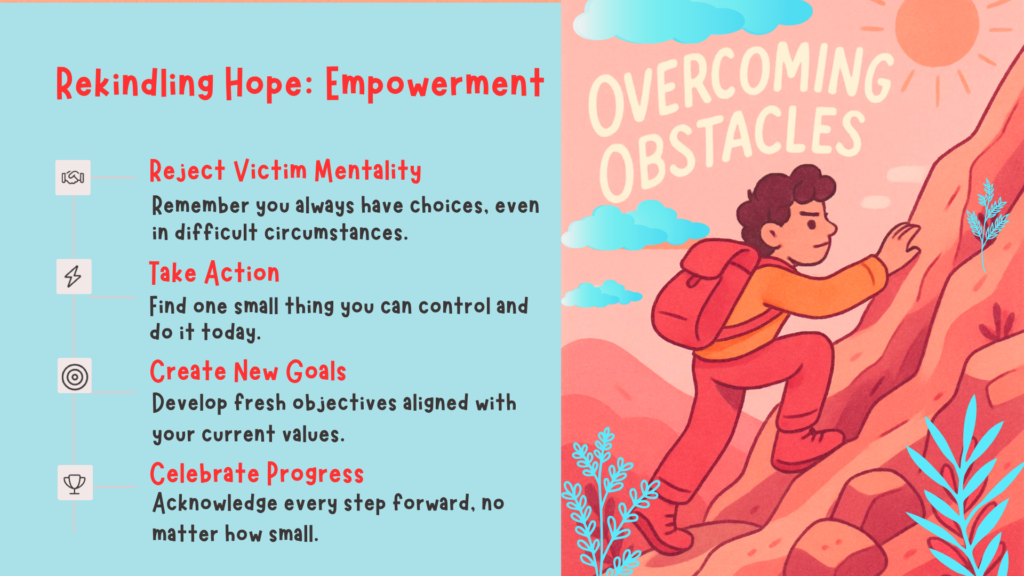
Quit Being a Victim
Accepting the circumstances of the disaster does not mean you’re on board with it, nor does it make you a victim of it. You’re still you, and there are things you can always control. By remembering you can exercise this control, you’re reminding yourself there’s still hope, and plenty of silver linings left to discover.
Find an Action
What can you do to improve things? Even if you’re in a global crisis, there’s something you can do. For example, donating blood or giving to charity both are productive ways to become part of the solution.
Create New Goals
Examining your emotions might have opened your eyes to some shifts in what you’re feeling about your goals. Maybe your hopelessness stems less from the disaster and more from feeling like you need to force yourself to keep going on with something you no longer want or need. This is a fantastic silver lining as now you have the opportunity to create new goals, more in keeping with your needs.
Seek Empowerment
Once you’ve ditched the victim mentality, it’s time to empower yourself. You’re a fantastic person who is going to get through this and still come out ahead. It’s time to take back this power by acting to control and claim what you still can of your life.
Find one thing you can do to help or change your situation and do it today. Remind yourself; this is you taking control. Feel the hope as you focus your efforts and energy into taking back this control. The silver lining here is in discovering all you’re capable of.
Acknowledge every step forward, no matter how small.
9. PRACTICE SILVER-LINING HOPE
Use Affirmations
Coming up with a mantra to repeat will help you to refocus your energies elsewhere, especially when you find yourself becoming hopeless in your attitudes. Affirmations are the script you can use to rewire your reactions and thought processes. What are the 7 things you’ve been telling yourself? What would you like to hear instead? Give yourself messages of hope and write them in places where you’ll easily see them. Doing this leaves silver linings all over your world, just waiting for you to discover them all over again.
Create a Hope Jar
What are you hoping for? If you’re having trouble naming things, why not make a list of things you would like to do. Enlist the help of friends if you’re stuck. Each item should list something fun, such as “I hope I can learn to sign “I love you” in ASL” or “I hope I can run a mile someday.”
Put these all in a jar then pull one out once a month. Make a goal to spend some time each day in making this goal a reality. For this exercise, you absolutely have to put things on this list, which are possible within your means. The goal here is to do something which builds hope in your life. If you can’t realize those hopes, then you’re only going to discourage yourself further.
Show Gratitude
You’ve already created a gratitude journal, but what about being mindful in your interactions and seeking out opportunities to show gratitude in your everyday life? The act of saying ‘thank you’ to a clerk or holding a door for someone will perk up your own mood and help you feel hopeful even as you perk up those around you.
Look Forward to Something
What are you hoping for? If the answer is nothing, this needs to be changed – fast! Hopelessness breeds in places where you have no future to enjoy. Even small things can become mini-goals you can enjoy anticipating. Couple this idea with the last one and set up a time to pamper yourself, you can look forward to. Hope loves having something fun to prepare for.
10. ACCEPT LIFE’S TRANSITIONS
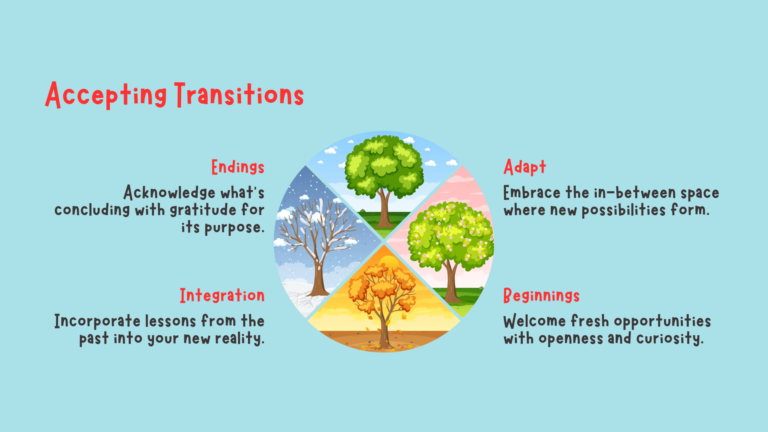
Endings
Acknowledge what’s concluding with gratitude for its purpose. If you feel hopeless because something in your life has ended or is ending, first mourn, then be thankful for what has gone, and be mindful of its purpose in your life.
Integration
Incorporate lessons from the past into your new reality. What did you learn from a negative situation that rendered hopelessness? Take what you learned and merge it with a new reality of your life.
Adapting
You had an idea of how things should be going in your life, and those things were upset. It doesn’t matter how it happened. What does matter is the ability to adapt to changing circumstances. Hopelessness comes from hanging on to doing things the old way.
Hope enables you to adapt. Who knows, you might even discover a silver lining in finding some completely new goal or way to do things you might never have considered otherwise.
Beginnings
Every beginning only happens because something else ended. Today’s disaster might just be the impetus to something new, amazing, and better than you ever imagined. Hope lies in knowing while transitions can be painful, they can also be beautiful. Look for what’s starting. This is the silver lining of your future peeking through.
LOOK FORWARD TO MANY SILVER LININGS
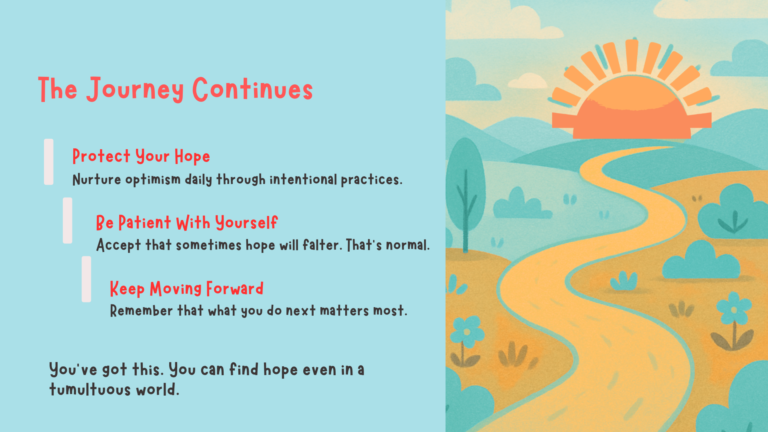
Hope is a powerful thing. It’s also something worth protecting. With hope, you can handle anything the world throws at you. Without it, you’re going to flounder and fall.
Thankfully, you’re in the position where you can create your own silver linings and ignite hope even when you feel it’s gone for good. The upshot of this is to act with intentionality. Work to build hope in your life daily. Revisit the tips any time life deals you a blow. And if you do find yourself falling for a time? Remind yourself it’s ok. This happens. Be patient with yourself. It’s what you do next that counts.
That’s something you can look forward to.
You’ve got this. You can find silver linings even in a cloudy world.
FURTHER READING
For easier reading of these linked articles, you may want to view in your browser’s ‘Reader View’ when available.
1 Finding Silver Linings in Stress

The author brings out the notion that when under stress, people can “identify and focus on positive elements within the stressor itself.” In other words you can cope and boost your mood by naming the positive aspects of a difficult event.
2 Why We Search for Silver Linings
March 13, 2024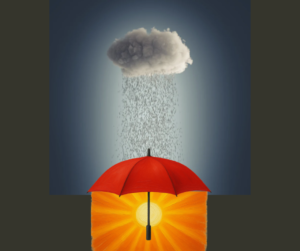
Explains how the instinct to find a silver lining may be part of our neurobiology. I was impressed by the findings of a study described here which correlated with the longstanding “broaden and build” theory of positive emotion. The article also mentions that searching for that silver lining could possibly backfire and prevent you from finding a solution to your problem. In other words, be hopeful but also do the work.
3. Hope as the Antidote
By Ashley Abramson
January 1, 2024
This article does a good job of explaining the concept of hope. It describes hope as “action-oriented and a skill that can be learned.” Hope is here clarified as developing pathways toward your goals within your circumstances. The piece cites several studies with their links so that you can get an in-depth understanding of the research and researchers.
4. Ashley Park Survived Leukemia—Now, She’s Helping Others Do The Same
By Sela Breen

Ashley Park did not let her dark clouds define her. She was determined to be hopeful and forward thinking in her quest to regain health.
She put her focus on all the people who were helping her and on her own determination.
From the article:
“…she says she was determined to not “let it affect my spirit, my mind, or my goals and ambitions.”
That drive to not be defined as “the sick girl in school” has stayed with Park. She believed it has defined her as an actor, performer, and person today, always refusing to be told that she is one thing.
“I’m not as fearful of challenges, and I know that there’s a way through,” she says, because she’s already made it through moments when she didn’t think she would.“
INSPIRATION
Wise Words
“Most of the important things in the world have been accomplished by people who have kept on trying when there seemed to be no hope at all.”
— Dale Carnegie
**************************************
Hope involves patient waiting for what is unseen.
—Romans 8:24–25 –
**************************************
“Hope is the thing with feathers that perches in the soul.”
— Emily Dickinson
**************************************
But those who hope in the Lord
will renew their strength.
They will soar on wings like eagles;
they will run and not grow weary,
they will walk and not be faint.
**************************************
“If you want to see the rainbow, you have to put up with the rain.”
– Dolly Parton
**************************************
“Change your thoughts and you change your world.”
– Norman Vincent Peale
**************************************
“Every day may not be good, but there is something good in every day.”
– Alice Morse Earle